Review: Women’s Day Clothesline Embroidery Design
As a designer who has spent countless hours staring at digitized paths and troubleshooting thread breaks, I approach every new machine embroidery design with a mix of curiosity and skepticism. We have all seen generic holiday graphics that look fine on a screen but turn into a tangled mess of satin stitches on fabric. That is why I took a close look at the International Women s Day Pictures on a Clothesline Embroidery Design. This isn’t just another clipart conversion; it is a thoughtful piece of Awareness themed art that requires careful handling to shine in a real-world embroidery project.
First Impressions and Visual Mood
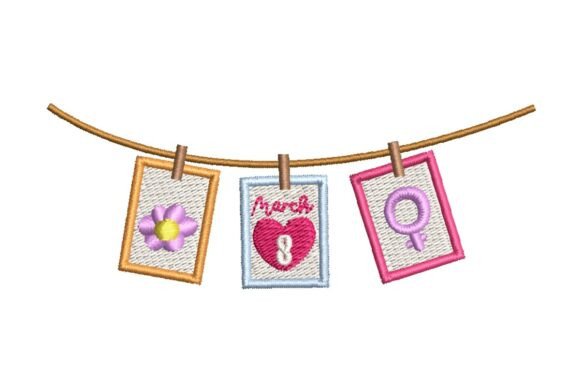
The immediate appeal of this design lies in its narrative charm. Instead of relying on bold, aggressive typography or complex portraits, it features three framed pictures strung along a light brown clothesline. This layout creates a sense of nostalgia and domestic warmth, which contrasts beautifully with the powerful message of International Women’s Day. The visual personality is gentle yet celebratory. For an Etsy seller or a boutique owner, this mood is crucial. It suggests that empowerment can be soft, personal, and integrated into daily life.
The composition is balanced, with the frames acting as focal points. However, from a technical standpoint, the "frames" within the design demand attention. If these are digitized with heavy satin stitch borders, they will pop nicely against lighter fabrics. If they rely on running stitch outlines, they may get lost on textured materials. The light brown clothesline acts as a connecting element, grounding the three distinct images. This structure makes the design versatile, allowing it to work as a central chest motif or a larger back piece depending on scaling.
Real-World Application: The Tote Bag Test
To truly evaluate a design, I imagine it on a specific product. Let’s consider a custom canvas tote bag, a staple for any craft business. Canvas has a visible weave, which can interfere with fine details. In this scenario, the International Women s Day Pictures on a Clothesline Embroidery Design performs well because the primary elements—the frames and the line—are substantial enough to hold their shape. The clothesline provides a horizontal anchor that prevents the design from looking like floating islands.
If you were creating a personalized gift for a mother, sister, or colleague, this design fits perfectly on a high-quality cotton tote. The neutral tone of the clothesline complements natural fiber colors like ecru, olive, or slate blue. It avoids the trap of being overly political or aggressive, making it a safe yet meaningful choice for corporate gifts or community group merchandise. The finished product feels curated rather than mass-produced, which increases perceived value.
Apparel and Wearables
Moving beyond accessories, let’s talk about custom apparel. A sweatshirt is an ideal candidate for this design. The thick fabric of a fleece or French terry sweatshirt supports the stitch density required for the framed pictures. Here, the design serves as a statement piece on the left chest or centered below the neckline. However, caution is needed with t-shirt applications. Single jersey knits are stretchy and thin. Without proper stabilization, the weight of the three frames could cause the fabric to pucker around the stitch lines. If you choose to embroider this on a tee, use a cut-away stabilizer and consider reducing the stitch count if your software allows, or ensure the digitizer has used appropriate pull compensation.
For baby embroidery, such as a onesie or a burp cloth, the scale must be reduced significantly. At smaller sizes, the details inside the frames might merge. It is essential to check the stitch density and detail level before committing to a small hoop. If the internal details of the pictures are too fine, they may not stitch out cleanly on such a small scale. In such cases, this design is better suited for toddler-sized items rather than newborn gear.
Technical Considerations for Stitchers
Before loading the digital embroidery file into your machine, there are several practical steps to take. First, always test the design on scrap fabric that matches your final project material. This is non-negotiable. You need to see how the thread colors interact with the fabric texture. The light brown clothesline, for instance, might disappear on a tan or beige fabric. Contrast is key for visibility.
- Check Thread Colors: Ensure the thread shades for the frames contrast sufficiently with the background fabric. High-contrast combinations enhance the clarity of the applique design elements if applicable.
- Stabilizer Selection: Use a tear-away stabilizer for stable woven fabrics like cotton or linen. For stretchy knits or delicate fabrics, a cut-away stabilizer is mandatory to prevent distortion.
- Hoop Size: Confirm the required hoop size before starting. This design likely fits in a standard 4x4 or 5x7 hoop, but verify the dimensions in your software to avoid cropping the clothesline ends.
- Density Review: Inspect the stitch count. If the frames are densely filled, consider using a lighter weight thread or adjusting the density to reduce bulk, especially on garments that will be worn directly against the skin.
Navigating Fabric and Placement Challenges
Not every surface is friendly to this design. Curved surfaces like caps present a challenge. The horizontal nature of the clothesline might distort when stitched over the curved front panel of a baseball cap. If you attempt this, use a strong stabilizer and consider splitting the design or adjusting the placement to the flattest part of the panel. Similarly, textured fabrics like terry cloth or heavy wool can obscure the finer details of the pictures within the frames. In these cases, the design works best as a bold graphic where the outline is more important than the internal detail.
Dark fabrics require careful thread selection. The light brown clothesline may need to be swapped for a brighter color, such as cream or yellow, to ensure it stands out. Always run a black-and-white mockup in your embroidery software to check for value contrast. If the design looks flat in grayscale, it will lack impact in real life.
Commercial Viability and Branding
For small shop products and commercial embroidery ventures, this design offers strong potential. It taps into the evergreen market of holiday and awareness-themed goods without feeling dated. The aesthetic is timeless enough to be sold year after year. When creating printable mockups for your online store, showcase the design on various items—aprons, pillow covers, and tea towels—to demonstrate its versatility. This helps buyers visualize the handmade product in their own homes.
However, always verify the licensing terms. While many designers allow commercial use of the finished product, some restrict the resale of the design assets themselves. Ensure you are compliant with the creator’s rules before listing items on platforms like Etsy or at local craft fairs. Transparency builds customer trust and protects your business reputation.
In conclusion, the International Women s Day Pictures on a Clothesline Embroidery Design is a well-conceived piece that balances sentiment with technical feasibility. It rewards careful preparation and thoughtful fabric selection. By respecting the limits of your machine and the properties of your materials, you can transform this digital file into a cherished tangible item that celebrates strength and grace.