Flamingo Summer Embroidery Design Review
As a designer who has spent years navigating the delicate balance between aesthetic appeal and technical execution, I approach every new machine embroidery design with a critical eye. The market is flooded with generic assets, but finding a piece that truly translates well from a digital screen to a physical textile is rare. Today, I am evaluating the Flamingo Summer Embroidery Design, a piece categorized under Baby Animals. My goal here is not just to describe what it looks like, but to determine if it holds up under the pressure of real-world production for your craft business or personal projects.
First Impressions: Elegance Meets Texture
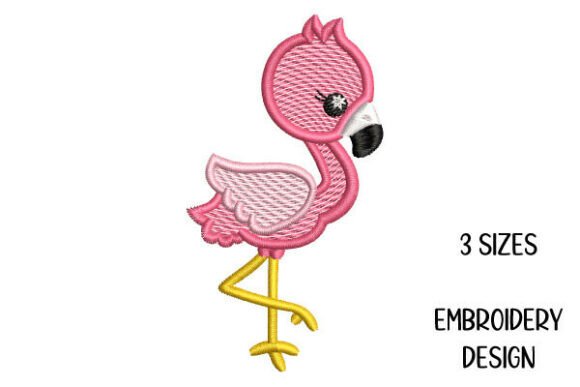
When I first loaded the preview of this flamingo, the immediate mood was one of stylized grace. It avoids the cartoonish excess often found in children's designs, opting instead for a silhouette that feels sophisticated enough for a boutique product yet playful enough for nursery decor. The description notes that the body is worked in open curved fills, while the beak, eye, and legs utilize satin stitch. This combination is promising. Open fills are crucial for reducing thread consumption and preventing puckering on lighter fabrics, which is a common pitfall with dense fill stitch patterns. Meanwhile, the use of satin stitch for the finer details adds a necessary pop of definition without overwhelming the overall composition.
The visual personality of the Flamingo Summer Embroidery Design suggests versatility. It does not scream "baby" exclusively; rather, it evokes a summer vibe that could easily transition into adult apparel or home goods. For an Etsy seller looking to expand their catalog beyond seasonal trends, this type of asset offers a timeless quality that can anchor a collection year-round.
Testing the Waters: A Real-World Scenario
To truly understand the utility of this design, let’s imagine a specific project: creating a line of custom embroidered tote bags for a local beachside shop. Tote bags are a staple for small businesses because they serve as walking advertisements, but they present unique challenges due to the fabric texture and the need for durability. In this scenario, the Flamingo Summer Embroidery Design becomes the centerpiece.
I envision placing this design on a natural canvas tote. The open curved fills would likely lay flat against the coarse weave of the canvas, avoiding the stiffness that can ruin a bag's drape. The contrast between the soft fill and the crisp satin stitch on the legs and beak would create a tactile experience that customers love to touch. If I were producing these as a handmade product, the clarity of the stitching would signal high quality immediately. A customer picking up the bag would see that the threads are secure and the design is intentional, boosting their trust in the brand and justifying a higher price point.
Alternatively, consider using this as a baby embroidery accent on a onesie or a blanket. Here, the softness of the fill stitch becomes even more critical. Babies have sensitive skin, and a design that is too dense or scratchy is a non-starter. The Flamingo Summer Embroidery Design appears structured to minimize bulk, making it a safe bet for infant wearables. However, as a professional, I would still insist on testing it on a scrap piece of the exact jersey knit intended for the final product to ensure the stretch of the fabric doesn't distort the curves of the flamingo's neck.
Navigating Fabric and Technical Challenges
While the design shows great promise, there are scenarios where caution is required. Not all fabrics play nice with intricate curves and mixed stitch types. If you attempt to apply this embroidery file to very thin or highly stretchy materials like silk or spandex blends without the proper stabilizer, you risk significant distortion. The open fills might pull away from the background, leaving gaps that look unfinished.
Similarly, working on dark fabrics requires careful consideration of thread colors. The default palette for a flamingo usually involves pinks and oranges, which may require a dense underlay or a different color strategy to stand out against black or navy backgrounds. Without sufficient coverage, the fill stitch might reveal the dark fabric underneath, muddying the design's elegance. Always test your digital embroidery file on a swatch of the actual fabric color before committing to a batch of custom apparel.
Another area of concern is the hoop size. While the design seems compact, the curve of the flamingo's leg and the angle of the neck demand a specific amount of space to maintain proportion. If you force this design into a hoop that is too small, you will lose the graceful lines that define its character. Check the dimensions of the embroidery project requirements against your machine's capabilities. If you are working on a cap or a curved surface, the tension changes, and the satin stitch details on the beak might buckle if the stabilizer isn't perfectly matched to the curvature.
Strategic Value for Your Craft Business
For the creative entrepreneur, the value of the Flamingo Summer Embroidery Design extends beyond the single stitch. It serves as a versatile design asset that can elevate your entire brand presentation. Whether you are selling personalized gifts, holiday embroidery items, or commercial embroidery merchandise, having a cohesive, high-quality motif helps build brand recognition.
Think about how this design fits into your marketing. A clean, well-executed flamingo on a pillow cover or an apron creates a strong visual for social media and printable mockups. Customers buy with their eyes first; if your finished product photos show crisp, clear stitching, engagement increases. Conversely, a poorly executed design with loose threads or distorted shapes can damage your reputation as a small shop owner.
This design also opens doors for cross-category sales. You aren't limited to just baby items. The same embroidered patch could be sold as a standalone accessory, applied to denim jackets, or used as a logo for a yoga studio. The adaptability of the Flamingo Summer Embroidery Design makes it a smart investment for inventory planning.
Professional Designer Notes and Best Practices
Before you integrate this design into your workflow, follow these practical steps to ensure success:
- Test on Scrap Fabric: Never skip the test run. Stitch the design on a piece of the exact material you plan to use, including the same stabilizer setup. Look for puckering, skipped stitches, or thread breakage.
- Check Thread Contrast: Ensure the thread colors provide enough contrast against the fabric. If the design is light, avoid light fabrics unless you plan to add a backing layer.
- Verify Hoop Size: Confirm that the design fits comfortably within your hoop without crowding the edges, which can cause registration issues.
- Inspect Small Details: Zoom in on the satin stitch areas like the eye and beak. These are prone to tangling if the density is too high or the needle is dull.
- Review Licensing: As a business owner, always confirm the licensing terms. Can you sell the finished product? Are you allowed to sell the digital embroidery file itself? Understanding these terms protects your business from legal issues.
- Consider Wash Durability: If creating items like kitchen towels or clothing that will be washed frequently, ensure the stitch density is robust enough to withstand agitation without fraying.
In conclusion, the Flamingo Summer Embroidery Design offers a compelling blend of style and technical soundness. Its mix of open fills and precise satin work makes it suitable for a wide range of applications, from delicate baby animals themes to bold tote bag designs. By approaching it with the right preparation and attention to detail, you can create products that not only look beautiful but also stand the test of time and customer scrutiny. It is a design worth adding to your library, provided you respect the nuances of the medium and the demands of your specific project.